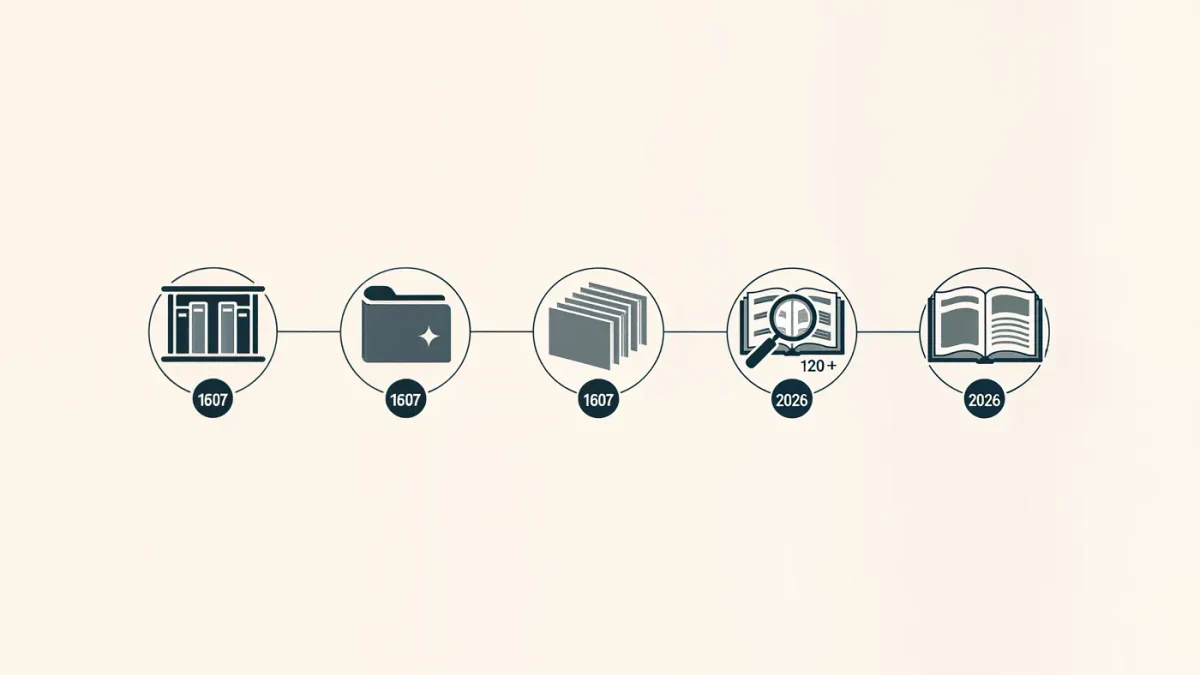
A fourteenth-century manuscript that has stood in a Shropshire school library since 1607 has been identified as the only complete surviving copy of Richard Rolle’s Emendatio vitae in its original, unrevised form. Shrewsbury School announced the identification on January 9, 2026. The volume, catalogued as MS 25, preserves the English mystic’s devotional handbook as its author first wrote it.
The identification is the work of Dr. Timothy Glover, a researcher in medieval literature, who worked through the school’s collection and published his findings while at Corpus Christi College, Cambridge; he is now at the University of Bergen. More than 120 other copies of the Emendatio vitae survive in libraries worldwide, according to the school — but every one of them descends from a later, abridged recension. Glover told the school he had been “the only person since the Middle Ages to have read this knowing that it’s Rolle’s original.”
Rolle, who died in 1349 at Hampole in Yorkshire after a life as a hermit and spiritual adviser, was among the most widely copied English religious authors of the late Middle Ages. The Emendatio vitae — “The Emending of Life” — is a short guide to the correction of life, reading and contemplative prayer, and it circulated so broadly that its textual history grew tangled almost at once. The Shrewsbury manuscript is the witness that escaped the tangle. Glover noted that Rolle offered medieval readers “practical strategies for stilling their wandering minds,” one reason the text was abridged and reshaped for different audiences.
Related stories: Nazi-Looted Vienna Mahzor Sells for $6.4 Million at Sotheby’s · Where to See Rembrandt’s Biblical Paintings.
The school’s provenance is unusually clean: the manuscript was given in 1607, a year after the foundation of the school’s ‘Taylor’ Library, whose rare holdings include incunabula, Newton’s Principia and Darwin’s On the Origin of Species. Headmaster Leo Winkley called it “an extraordinary discovery for Shrewsbury School.”
Discoveries of this rank now rarely come from attics; they come from shelves, when cataloguing projects catch up with collections acquired centuries ago. A unique copy changes the editor’s task: any future edition of the Emendatio vitae must now collate against MS 25 rather than against the abridged tradition that scholars had taken for the whole story.